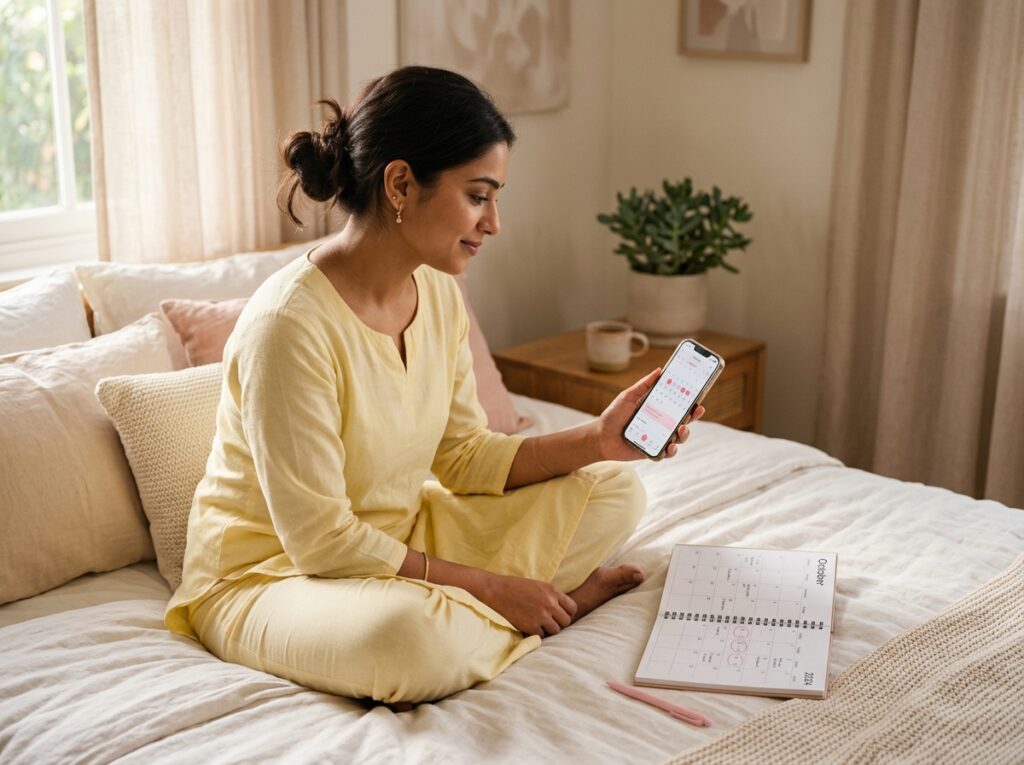

How Many Days After My Period Can I Get Pregnant? Understanding Your Fertile Window
You can get pregnant as early as 5–7 days after your period starts if you have a short cycle (21–24 days) and ovulate early. For most women with a 28-day cycle, the most fertile days are Days 11–14. However, because cycles vary, calculating your personal fertile window is essential.
“How many days after my period can I get pregnant?” is one of the most commonly searched fertility questions online and for good reason. Conception timing can feel confusing, especially when advice varies so widely.
The honest answer? It depends entirely on your cycle specifically, when you ovulate. And while there are helpful general guidelines, understanding the underlying biology puts you firmly in control of your fertility planning.
Whether you’re trying to conceive or simply want to understand your reproductive cycle better, this guide will walk you through everything you need to know including phase-by-phase cycle breakdown, fertile window calculation, and common myths that may be leading you astray.
Understanding the Menstrual Cycle
Before answering when you can get pregnant, it’s important to understand the four phases of the menstrual cycle. Your “period” is just one small part of a much larger hormonal cycle.
Menstrual Phase (Days 1–5)
This is the phase most women are most aware of menstruation. When pregnancy hasn’t occurred, the uterine lining (endometrium) sheds, resulting in your period. Hormone levels (oestrogen and progesterone) are at their lowest.
Can you get pregnant during your period? Technically unlikely but not impossible particularly for women with very short cycles or long periods. Sperm can survive 5 days inside the reproductive tract, so if ovulation occurs soon after menstruation ends, residual sperm could potentially fertilise the egg.
Follicular Phase (Days 1–13 in a 28-day cycle)
Overlapping with menstruation, the follicular phase begins on Day 1 and continues until ovulation. During this time:
- The pituitary gland releases FSH (follicle-stimulating hormone)
- FSH stimulates follicles in the ovaries to grow
- One dominant follicle matures and releases increasing amounts of oestrogen
- The uterine lining begins to thicken in preparation for a potential pregnancy
As oestrogen levels rise throughout the follicular phase, the cervix begins producing increasingly fertile cervical mucus progressing from dry or sticky to creamy and eventually to egg-white consistency.
The length of the follicular phase varies considerably between women and this is the primary reason why ovulation timing differs. A longer follicular phase = later ovulation.
Ovulation Phase (Around Day 14 in a 28-day cycle)
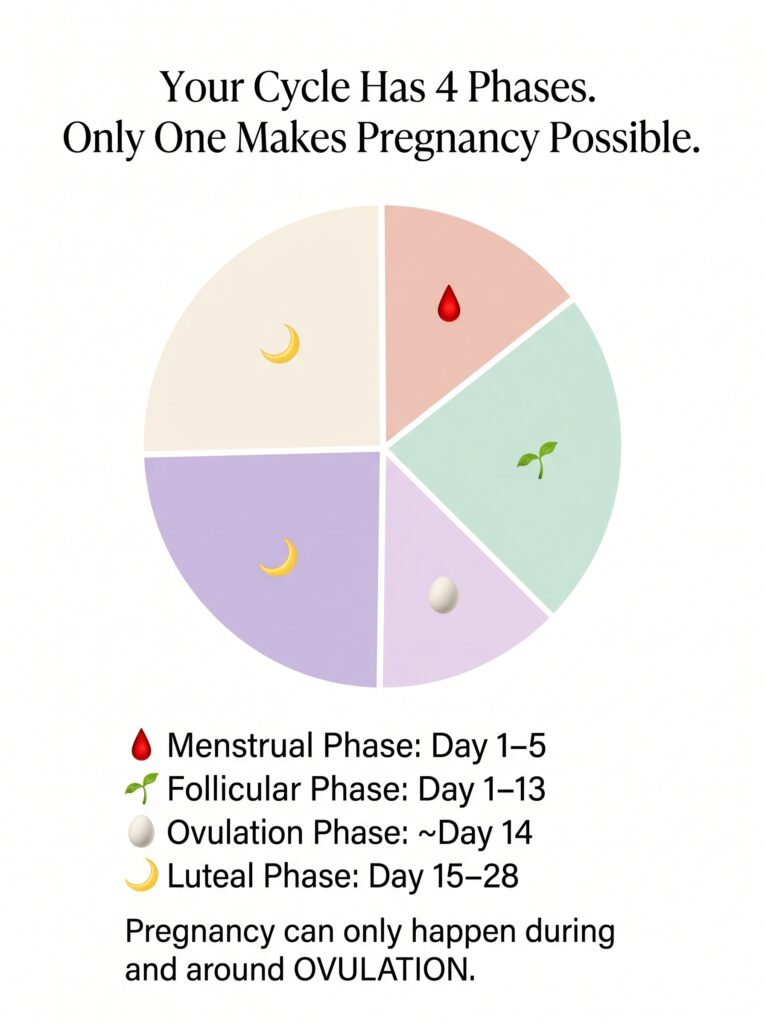
The peak oestrogen level triggers a surge of LH from the pituitary gland. This LH surge causes the dominant follicle to rupture and release the egg this is ovulation.
Key facts about ovulation:
- Occurs approximately 24–36 hours after the LH surge
- Egg survives for 12–24 hours after release
- Sperm can survive 3–5 days in fertile cervical mucus
- The fertile window includes the 5 days before ovulation and ovulation day itself
Luteal Phase (Days 15–28 in a 28-day cycle)
After ovulation, the ruptured follicle transforms into the corpus luteum, which produces progesterone. Progesterone:
- Thickens the uterine lining for implantation
- Causes the slight rise in BBT
- Suppresses further ovulation in that cycle
The luteal phase is remarkably consistent across women lasting 12–16 days (typically 14 days). This is why you can work backwards from your next expected period to estimate your ovulation date.
If fertilisation occurs, the embryo implants in the uterine lining (Days 20–24) and hCG production begins, maintaining the pregnancy. If fertilisation doesn’t occur, the corpus luteum breaks down, progesterone falls, and menstruation begins starting the cycle again.
When Are You Most Fertile?
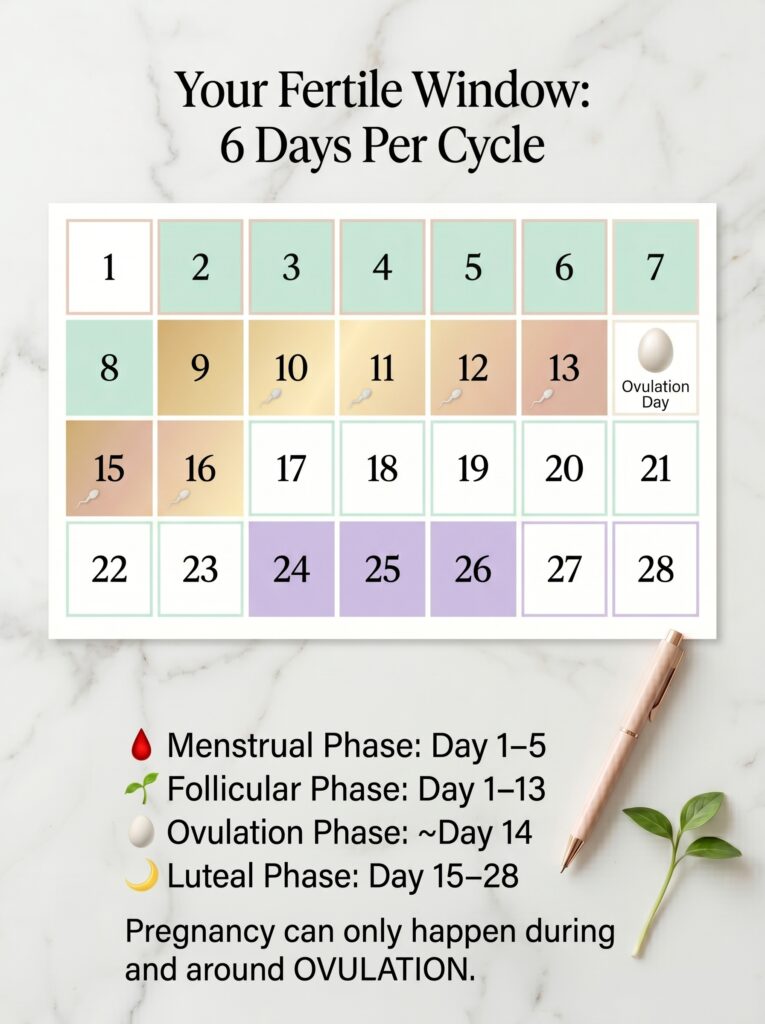
Your most fertile days are the 2–3 days before ovulation and ovulation day itself. Here’s how to estimate them based on your cycle length:
| Cycle Length | Approximate Ovulation Day | Most Fertile Days |
|---|---|---|
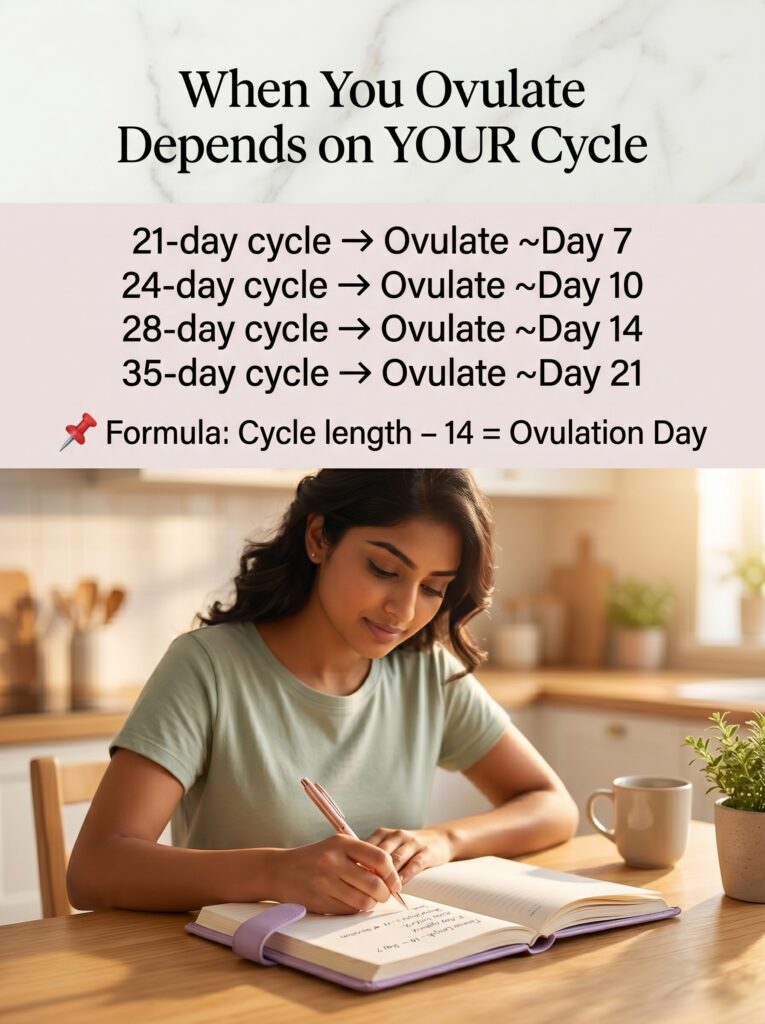
| 21 days | Day 7 | Days 5–8 |
| 24 days | Day 10 | Days 8–11 |
| 28 days | Day 14 | Days 12–15 |
| 30 days | Day 16 | Days 14–17 |
| 35 days | Day 21 | Days 19–22 |
Formula: Cycle length – 14 = approximate ovulation day (using the consistent 14-day luteal phase)
Pregnancy Chances After a Period
Here’s a practical breakdown of pregnancy probability at different points after menstruation begins (based on a typical 28-day cycle):
- Days 1–5 (during period): Very low. Ovulation is unlikely, and the uterine environment is not hospitable for implantation.
- Days 6–9 (just after period): Low but not zero, especially in shorter cycles. Sperm deposited during this window can survive until ovulation in some women.
- Days 10–14 (approaching/at ovulation): Highest probability of conception. This is the fertile window for a 28-day cycle.
- Days 15–17 (just after ovulation): Rapidly declining. The egg has typically already dissolved.
- Days 18–28 (luteal phase): Extremely low. The window for fertilisation has closed.
Important: These numbers are based on a typical 28-day cycle. Your fertile window may fall earlier or later depending on your personal cycle length and ovulation timing.
Factors That Affect Fertility Timing
Cycle Length
The longer or shorter your menstrual cycle, the earlier or later you’ll ovulate. Since the luteal phase is fairly fixed at ~14 days, the follicular phase length determines when ovulation occurs.
- Short cycle (21 days): Ovulation around Day 7 you could become pregnant very shortly after your period ends
- Long cycle (35+ days): Ovulation around Day 21 or later your fertile window falls much further into the month
Irregular Periods
If your periods are irregular (varying by more than 7–9 days each cycle), predicting your fertile window using calendar calculations alone is unreliable.
In this case:
- Ovulation predictor kits become essential they detect the LH surge regardless of cycle irregularity
- Monitoring cervical mucus provides real-time fertility information
- Tracking BBT helps identify whether ovulation is occurring at all
Common causes of irregular periods in Indian women include PCOS (affecting up to 20% of Indian women), thyroid disorders, stress, and significant weight changes.
Ovulation Variations
Even in women with regular cycles, ovulation doesn’t always occur on exactly the same day. Illness, travel, disrupted sleep, emotional stress, or hormonal shifts can push ovulation earlier or later by several days in any given month.
This is why tracking physical signs (cervical mucus, BBT, OPKs) in addition to calendar calculations gives you a much more accurate picture of your real-time fertility.
Common Myths About Getting Pregnant
Myth 1: You can only get pregnant on ovulation day.
Fact: You can get pregnant in the 5 days before ovulation due to sperm longevity. Ovulation day alone has a lower probability of conception than the 1–2 days preceding it.
Myth 2: Day 14 is everyone’s ovulation day.
Fact: Day 14 applies only to a classic 28-day cycle. Ovulation timing varies widely based on cycle length and individual hormonal patterns.
Myth 3: You can’t get pregnant during your period.
Fact: While rare, it is possible particularly for women with short cycles or long periods. Sperm deposited late in menstruation can survive until early ovulation.
Myth 4: Regular periods mean you’re definitely ovulating.
Fact: Anovulatory cycles (cycles without ovulation) can still produce a bleed that resembles a period. This is less common but does occur.
Myth 5: You’ll always feel ovulation.
Fact: Many women experience no physical ovulation symptoms. This is normal. Tracking tools fill in the gap.
Myth 6: If you’ve had irregular periods your whole life, you can’t get pregnant.
Fact: Irregular periods often indicate irregular ovulation not absent ovulation. With proper diagnosis and management (including PCOS treatment if applicable), many women with irregular cycles conceive successfully.
How to Calculate Your Fertile Window
Method 1: Calendar Method (for regular cycles)
- Track your cycle length over 3–6 months
- Find your average cycle length
- Subtract 14 to estimate your ovulation day
- Your fertile window is 5 days before + the day of ovulation
Method 2: OPK + Calendar Combination (most recommended)
- Use the calendar method to estimate when ovulation might occur
- Begin OPK testing 3–4 days before your estimated ovulation day
- Identify your LH surge this triggers ovulation within 24–36 hours
- Combine with cervical mucus tracking for added confidence
Method 3: Fertility Apps Apps like Flo, Clue, and the Motherly app take your cycle data and predict your fertile window. Accuracy improves over multiple cycles.
Fertile Window Checklist
- Track your period start date each month
- Calculate your average cycle length (over 3–6 months)
- Identify your estimated ovulation day (cycle length – 14)
- Start OPK testing 3–4 days before estimated ovulation
- Monitor cervical mucus daily
- Track BBT every morning (optional but informative)
- Have sex every 1–2 days during your fertile window
- Note any cycle irregularities to discuss with your doctor
Frequently Asked Questions
1. How many days after my period can I get pregnant?
For a 28-day cycle, pregnancy is most likely in Days 10–14. For shorter cycles, fertility begins sooner potentially just 5–7 days after Day 1 of your period.
2. Can I get pregnant the day after my period ends?
Possibly, especially if you have a short cycle. In a 21-day cycle, ovulation may occur as early as Day 7 meaning sperm deposited just after menstruation could still be viable at ovulation.
3. What cycle length is considered regular?
A cycle is considered regular if it falls between 21 and 35 days and varies by no more than 7–9 days between cycles.
4. How can I calculate my ovulation day?
Subtract 14 from your total cycle length. For a 30-day cycle: Day 30 – 14 = Day 16. Your fertile window would be approximately Days 14–17.
5. Can irregular periods prevent pregnancy?
Irregular periods can make conception more challenging by making ovulation prediction harder. However, many women with irregular cycles conceive successfully with the right tracking tools and, if needed, medical support.
6. Does the length of my period affect when I ovulate?
The length of your period doesn’t directly determine ovulation timing what matters is your total cycle length. However, very long periods may be a sign of hormonal imbalance worth investigating.
7. Can I use the rhythm method to plan pregnancy?
The calendar or rhythm method is a rough guide but is not highly reliable for most women, especially those with variable cycles. Combine it with OPKs and cervical mucus tracking for much greater accuracy.
8. Can I get pregnant a week after my period?
Yes particularly if your cycle is 21–24 days long. In these cases, ovulation may occur as early as Day 7–10, meaning the week after your period is your fertile window.
9. Is there a time in my cycle when pregnancy is absolutely impossible?
The early days of your period (Days 1–2) carry very low pregnancy risk. The deep luteal phase (Days 18+ for a 28-day cycle, after ovulation has confirmed passed) also carries very low risk. However, no day is completely risk-free for women with highly irregular cycles.
10. What if my period is late am I pregnant?
A late period can signal pregnancy, but can also result from stress, illness, hormonal imbalance, or excessive exercise. Take a home pregnancy test from the first day of a missed period for clarity.
Key Takeaways
- The menstrual cycle has 4 phases: menstrual, follicular, ovulation, and luteal
- Your fertile window lasts approximately 6 days per cycle
- Ovulation timing depends on your cycle length not everyone ovulates on Day 14
- For short cycles, pregnancy is possible very soon after the period ends
- OPKs, cervical mucus tracking, and BBT are the most reliable ways to identify your fertile window
- Irregular cycles make calendar-based predictions unreliable use tracking tools instead
Final Words
Understanding the relationship between your period and your fertile window is one of the most practical things you can do for your reproductive health whether you’re trying to conceive now, planning for the future, or simply curious about your own body.
The answer to “how many days after my period can I get pregnant?” is genuinely personal. But with the right tracking approach, you can find your answer with confidence.
Motherly is here to support you with trusted, science-backed guidance at every step.