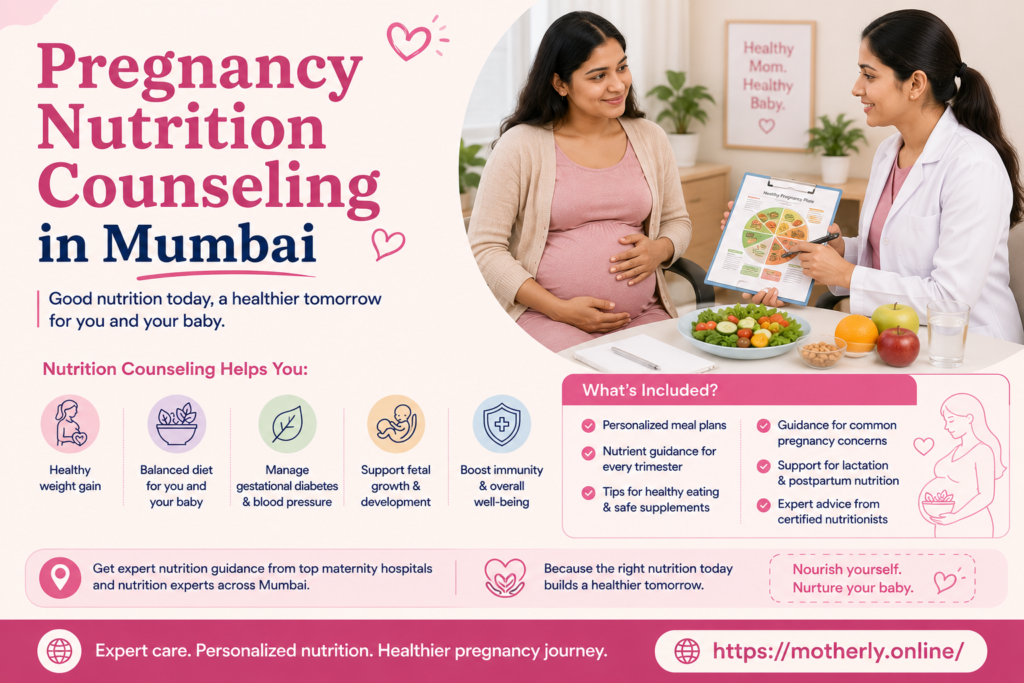

What you eat during pregnancy has a direct impact on your baby’s development, your own health and the long-term wellbeing of your family. Yet pregnancy nutrition is one of the most confusing aspects of antenatal care, with conflicting advice from family members, online sources and sometimes even between healthcare providers.
Pregnancy nutrition counseling in Mumbai offers expecting mothers access to qualified prenatal dietitians and nutritionists who provide evidence-based, culturally appropriate dietary guidance tailored to each trimester and individual health profile. From managing morning sickness in the first trimester to building iron reserves in the third, the right nutritional support can transform your pregnancy experience.
| 58% of pregnant women in India are anaemic, making iron-rich nutrition critical | 400mcg folic acid required daily in early pregnancy to prevent neural tube defects | 300–500 additional calories per day needed in the second and third trimesters | 1 in 10 Indian pregnant women has gestational diabetes requiring a specialist nutrition plan |
Why Pregnancy Nutrition Counseling Matters
Pregnancy increases nutritional demands significantly. A developing baby draws on maternal reserves for brain development, bone formation, immune system development and organ maturation. Inadequate nutrition during pregnancy is associated with:
- Intrauterine growth restriction (IUGR) and low birth weight
- Neural tube defects due to folic acid deficiency
- Iron deficiency anaemia causing fatigue, breathlessness and increased infection risk
- Gestational diabetes if carbohydrate intake is poorly managed
- Preterm labour and poor postnatal milk production
- Postpartum depression linked to omega-3 and micronutrient deficiencies
Conversely, excess weight gain, over-supplementation and certain food safety risks can also cause harm. A personalised nutrition counseling session provides a middle path grounded in your individual health status, food preferences and cultural background.
| Trimester-Specific Plans Customised meal plans for each trimester addressing changing caloric, protein, iron and calcium needs as the baby grows. | Anaemia Management Iron-rich food combinations, absorption-boosting strategies and supplement guidance to manage the high anaemia burden in Indian pregnancies. | GDM Nutrition Therapy Carbohydrate-controlled meal plans designed for gestational diabetes management without compromising foetal growth. | Culturally Aligned Guidance Dietary plans that work with Indian, Maharashtrian, South Indian and other regional food traditions rather than against them. |
Trimester-by-Trimester Nutrition Guide
| Trimester | Key Nutritional Focus | Priority Foods | Common Challenges |
|---|---|---|---|
| First (Weeks 1–13) | Folic acid, B12, iron, managing nausea and food aversions | Leafy greens, dals, eggs, fortified cereals, citrus fruits, ginger | Morning sickness, food aversions, difficulty meeting caloric needs |
| Second (Weeks 14–27) | Protein, calcium, vitamin D, omega-3 fatty acids, iron | Dairy, paneer, ragi, fish, sesame seeds, nuts, legumes | Heartburn, constipation, overeating due to return of appetite |
| Third (Weeks 28–40) | Iron, calcium, magnesium, fibre, continued protein | Red meat or plant-based iron sources, dates, figs, whole grains | Reduced stomach capacity, oedema, gestational hypertension diet needs |
Key Nutrients in Pregnancy and Indian Food Sources
| Nutrient | Why It Matters and Indian Food Sources |
|---|---|
| Iron | Prevents anaemia and supports foetal brain development. Sources: rajma, chana, methi leaves, liver, jaggery (gud), sesame seeds (til), amaranth (rajgira). Pair with vitamin C-rich foods to improve absorption. |
| Folic Acid (B9) | Prevents neural tube defects in the first trimester. Sources: spinach, drumstick leaves (moringa), green peas, orange, fortified atta. Supplementation of 400mcg daily is recommended from preconception. |
| Calcium | Supports foetal bone and teeth formation. Sources: milk, curd, paneer, ragi, sesame seeds, drumstick leaves, amaranth. Calcium absorption depends on adequate vitamin D levels. |
| Protein | Essential for foetal organ and muscle development. Sources: dal, chana, rajma, soya, paneer, eggs, lean chicken, fish, tofu. Protein needs increase to approximately 70–100g daily in the second and third trimesters. |
| Omega-3 (DHA/EPA) | Critical for foetal brain and eye development. Sources: fatty fish (rohu, bangda/mackerel), flaxseeds (alsi), walnuts. Fish twice a week is generally safe; avoid high-mercury fish like shark or swordfish. |
| Vitamin D | Regulates calcium absorption and foetal bone health. Sunlight exposure in early morning, fortified dairy, eggs and fatty fish. Mumbai’s urban population is frequently deficient; testing and supplementation are often recommended. |
| Iodine | Supports foetal thyroid development and brain growth. Sources: iodised salt, dairy products, fish. Do not use rock salt or sendha namak as a primary salt source during pregnancy as it lacks iodine. |
| “My nutritionist in Bandra was the first person who actually sat with me and explained why I was constantly tired. My iron was borderline, and she taught me which foods to combine at each meal to maximise absorption. No more supplements I did not understand, just proper food knowledge.”— Kavitha R., Bandra East, Mumbai |
Gestational Diabetes Nutrition Counseling in Mumbai
Gestational diabetes (GDM) is one of the most common complications requiring specialist nutritional intervention during pregnancy. An estimated 10 to 14 percent of pregnant women in Mumbai develop GDM, largely influenced by Indian dietary patterns high in refined carbohydrates.
A GDM nutrition plan in Mumbai typically includes:
- Carbohydrate distribution across 5 to 6 small meals and snacks per day to prevent blood glucose spikes
- Glycaemic index education: choosing low-GI foods such as whole grains, legumes and non-starchy vegetables
- Protein inclusion at every meal to slow glucose absorption
- Healthy fat integration from nuts, seeds and cold-pressed oils
- Blood glucose target education and diary maintenance
- Progressive monitoring with dietary adjustments based on fasting and post-meal glucose readings
GDM nutrition counseling does not mean eliminating rice or roti entirely. It means restructuring how, when and how much is eaten in ways that are sustainable within the context of Indian family cooking.
Foods to Limit or Avoid During Pregnancy
While a varied diet is encouraged, certain foods carry specific risks during pregnancy that are important for Mumbai mothers to be aware of:
- Raw or undercooked meat, seafood and eggs (listeria and salmonella risk)
- Unpasteurised milk and cheeses such as certain artisanal varieties
- Papaya (raw or semi-ripe): associated with uterine contractions due to papain content
- Excess sesame seeds (til) and fenugreek (methi) in large culinary amounts in the first trimester
- High-mercury fish such as king mackerel, shark and swordfish
- Street food with unclear water hygiene: chaat, pani puri and cut fruit from unverified vendors
- Excess caffeine: limit to under 200mg per day (approximately 1 to 2 cups of tea or coffee)
- Herbal supplements and kadha remedies not cleared by your OB-GYN
| A pregnancy nutritionist in Mumbai will help you navigate family and cultural food traditions while keeping safety as the priority. Many traditional Indian foods are pregnancy-safe and nutritious; the goal of counseling is informed choice, not wholesale restriction. |
Frequently Asked Questions: Pregnancy Nutrition Counseling in Mumbai
How is a pregnancy nutritionist different from a general dietitian?
A prenatal nutritionist or dietitian has specific training and experience in the unique nutritional demands of pregnancy, gestational complications such as GDM and anaemia, and postnatal nutrition for breastfeeding. They also understand the cultural food contexts that are relevant to Mumbai’s diverse population, which is important for practical, sustainable dietary guidance.
When should I start pregnancy nutrition counseling?
Ideally at your booking appointment or early first trimester. Starting early gives you time to address deficiencies such as iron or vitamin D before they affect foetal development. If you have GDM, a nutrition consultation should happen within one to two weeks of diagnosis. It is never too late to start: even a third trimester consultation can improve the last weeks of pregnancy and prepare for breastfeeding.
Is a vegetarian or vegan diet safe during pregnancy?
A well-planned vegetarian pregnancy diet is safe and can meet all nutritional needs. Key nutrients to monitor include iron, vitamin B12, zinc, omega-3 and vitamin D, which are predominantly found in animal products. Vegan pregnancies require more careful supplementation and regular monitoring of B12 and iron levels. A prenatal nutritionist can create a complete plant-based pregnancy plan appropriate for your dietary preferences.
My mother-in-law says I should avoid papaya. Is that true?
Raw and semi-ripe papaya contains papain, an enzyme that some studies suggest may trigger uterine contractions, particularly in the first trimester. While the evidence in humans is limited, it is a commonly cited caution in obstetric practice. Ripe papaya in moderate portions is generally considered safe. As with many Indian family food beliefs, some are rooted in evidence and some are not. A nutrition counselor can help you distinguish between the two.
How much weight should I gain during pregnancy?
The Institute of Medicine (IOM) guidelines recommend weight gain of 11 to 16 kg for women with a normal pre-pregnancy BMI. Underweight women may need to gain more, while those who are overweight should target a lower range. Weight gain in GDM or hypertensive pregnancies is closely monitored. Your nutritionist will track this alongside your OB-GYN and adjust dietary guidance accordingly.
| Book a Pregnancy Nutrition Consultation in Mumbai Work with certified prenatal dietitians across Bandra, Andheri, Juhu, Powai and Dadar for trimester-specific meal plans, GDM nutrition therapy and anaemia management tailored to Indian food traditions. |