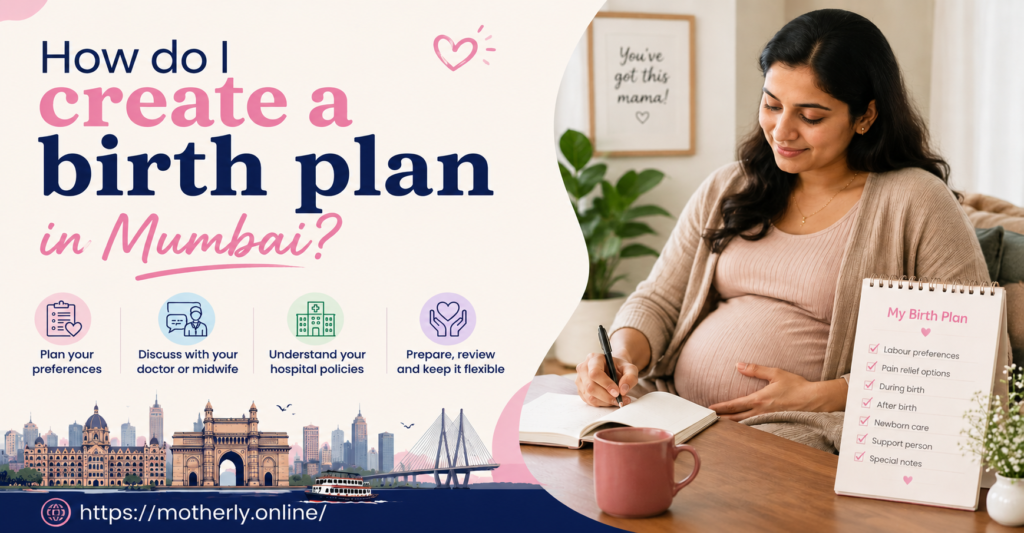

A birth plan is more than a document. It is a communication tool between you, your birth partner and your healthcare team that reflects your preferences, values and priorities for your labour and delivery experience. Birth planning in Mumbai has evolved significantly, with more families now actively engaging with their delivery choices rather than leaving all decisions to chance or hospital protocol.
Whether you are planning a vaginal birth, exploring options for pain management, preparing for a scheduled caesarean or considering a water birth at a specialist centre, having a clear birth plan ensures your voice is heard when it matters most. This guide walks you through everything you need to know about birth planning in Mumbai, from the elements of a strong plan to hospitals that support individualised birth preferences.
| 48% caesarean section rate in Mumbai’s private hospitals, highest in urban India | 3rd trimester ideal time to finalise your birth plan, typically between 32 and 36 weeks | 70% of women who use a birth plan report feeling more in control during labour | 1 in 3 Indian mothers experience unplanned or emergency delivery deviations from initial preferences |
Why Birth Planning Matters
Many expecting mothers in Mumbai underestimate the value of birth planning, assuming that delivery decisions will be made in the moment by their doctor. While clinical safety always takes precedence, a clearly communicated birth plan offers several important benefits:
- Ensures your preferences around pain relief, mobility, foetal monitoring and support persons are known in advance
- Reduces decision fatigue during active labour when cognitive load is highest
- Opens structured conversations with your OB-GYN about realistic birth options
- Strengthens your birth partner’s role by giving them a clear brief
- Creates a fallback communication tool if you are unable to verbalise preferences during labour
- Helps you mentally prepare for the birth experience, reducing fear and anxiety
| Informed Choices Understand all delivery options available to you in Mumbai and make choices based on evidence, not anxiety. | Hospital Alignmen Select a hospital or birth centre whose policies align with your preferences for mobility, monitoring and pain management. | Birth Partner Prep Brief your partner or doula on your preferences so they can advocate for you effectively during labour. | Flexible Planning Build contingency clauses into your plan so deviations for clinical reasons are emotionally prepared for. |
Key Elements of a Birth Plan
A comprehensive birth plan typically addresses the following areas. Your specific choices in each area will be shaped by your health status, hospital capabilities and personal values:
Labour Environment
- Preferred lighting, music and temperature in the delivery room
- Who you want present: partner, family member, doula or a specific midwife
- Whether you prefer to labour in bed, on a birthing ball or with freedom of movement
- Your preference on internal examinations and how frequently they are conducted
Pain Management Preferences
- Natural methods: breathing techniques, massage, water therapy, TENS machine
- Medical methods: epidural anaesthesia, gas and air (Entonox), IV opioids
- Whether you want the option to decide on pain relief during labour or have a fixed preference
Monitoring and Interventions
- Preference for intermittent auscultation vs continuous electronic foetal monitoring (EFM)
- Views on ARM (artificial rupture of membranes) to speed up labour
- Your position on induction of labour if you go past your due date
- Views on episiotomy and instrumental delivery (forceps or vacuum)
Caesarean Section Preferences (if applicable)
- Whether you want a gentle or family-centred caesarean with immediate skin-to-skin contact
- Who you want present in the operating theatre
- Preference on watching the delivery via a lowered drape (if the hospital allows)
- Views on spinal vs general anaesthesia for elective caesareans
Immediately After Birth
- Delayed cord clamping preferences (typically 1 to 3 minutes is now recommended by WHO)
- Immediate skin-to-skin contact with your baby
- Whether you want to attempt breastfeeding within the first hour
- Your preference on Vitamin K administration for the newborn
| “My doctor was wonderful but during my first birth I had no idea what I wanted. For my second, I came with a two-page birth plan and she reviewed it with me at 34 weeks. On the day, even though things changed, my doula had the plan and the nurses knew exactly what mattered to me.”— Rima S., Bandra West, Mumbai |
Delivery Options Available in Mumbai
| Delivery Type | What You Need to Know for Mumbai |
|---|---|
| Vaginal Birth | Standard first-choice delivery for low-risk pregnancies. Most Mumbai hospitals support active and upright birth positions. Discuss mobility policies with your OB-GYN in advance. |
| Epidural Anaesthesia | Widely available at private hospitals in Bandra, Andheri, Powai and Juhu. Not available at all government facilities. Discuss availability and timing with your anaesthesiologist. |
| Elective Caesarean | Available at all private hospitals and major government medical colleges. Discuss clinical indication criteria with your OB-GYN. Elective c-sections should not be before 39 weeks without medical reason. |
| Water Birth | Limited availability in Mumbai. Offered at select boutique birth centres and private hospitals. Requires confirmed low-risk pregnancy status and specialist-trained staff. |
| VBAC (Vaginal Birth After Caesarean) | Available at hospitals with 24/7 anaesthesia and neonatal care capacity. Not all Mumbai clinics support VBAC. Confirm policy with your provider early in the third trimester. |
| Home Birth | Very limited and generally not recommended in urban Mumbai due to hospital proximity advantages. Seek specialist midwifery guidance if considering this option. |
Birth Planning Timeline in Mumbai
| Week Range | Birth Planning Activity |
|---|---|
| 20–24 weeks | Identify your preferred hospital or birth centre and confirm they accept your insurance or payment model |
| 28–30 weeks | Attend childbirth education classes to understand labour stages, pain management and newborn care |
| 30–32 weeks | Draft your birth plan with the help of your OB-GYN, doula or midwife |
| 32–34 weeks | Review your plan with your OB-GYN and make adjustments based on your current health and the baby’s position |
| 34–36 weeks | Complete hospital pre-registration, prepare your hospital bag and brief your birth partner |
| 36–38 weeks | Finalise your birth plan document. Keep copies with you, your partner, your doula and your hospital file |
| 38+ weeks | Attend weekly or fortnightly appointments. Revisit your plan for any changes based on clinical findings |
| Mumbai Traffic Consideration: Factor your travel time to hospital into your birth plan. Women in areas like Navi Mumbai, Thane or Mira Road should have a clear action plan for different times of day given Mumbai’s traffic conditions. Discuss this with your OB-GYN during your 36-week appointment. |
Hospital Features to Consider During Birth Planning
Not all hospitals in Mumbai offer the same birth environment or policies. When choosing your delivery facility, consider:
- 24/7 anaesthesia availability for emergency or requested epidural
- Level 2 or Level 3 NICU for high-risk or preterm deliveries
- Policy on companion presence during labour and caesarean sections
- Availability of birthing balls, pools or other active labour aids
- Support for immediate skin-to-skin and breastfeeding in the first hour
- Private labour rooms vs shared ward policies
- VBAC support capacity
- Neonatal resuscitation facilities on site
Frequently Asked Questions: Birth Planning in Mumbai
When is the best time to create a birth plan?
Most birth educators and OB-GYNs recommend creating your birth plan between 32 and 36 weeks. By this point you will have a clear picture of your health, your baby’s position and your hospital’s policies. Creating it too early means it may need significant revision; waiting too long leaves little time for meaningful discussion with your provider.
Will my doctor in Mumbai follow my birth plan?
A birth plan is a guide, not a binding contract. Clinical safety always takes precedence. However, sharing your plan with your OB-GYN in advance enables a meaningful conversation about what is feasible at your hospital. Most private practitioners in Mumbai are receptive to reviewing birth preferences during the 34-week appointment.
Should I include caesarean preferences in my birth plan even if I want a vaginal birth?
Yes. Including your preferences for a potential caesarean section, even as a contingency, is an important part of thorough birth planning. Unplanned caesareans happen in approximately 15 to 20 percent of planned vaginal births in Mumbai’s hospitals, and knowing your preferences in advance can reduce distress if this occurs.
Do I need a doula for birth planning support in Mumbai?
A doula is not required but can be highly valuable. Doulas specialise in birth preparation, emotional support and advocacy during labour. They are familiar with Mumbai’s hospital environments and can help translate clinical discussions into plain language, support your birth partner and ensure your preferences are communicated during labour.
How do I handle a birth plan if my pregnancy becomes high risk?
High-risk pregnancies require more flexibility in birth planning. Work closely with your maternal-foetal medicine specialist or high-risk OB-GYN to identify which preferences are still feasible and which may need to be modified. A good birth plan for a high-risk pregnancy focuses on clear communication, emotional preparation and contingency clauses.
| Start Your Birth Planning Journey in Mumbai Work with experienced birth educators, doulas and OB-GYNs across Bandra, Andheri, Juhu, Powai and Dadar to create a birth plan that puts your preferences at the centre of your delivery experience. |