
Staying physically active during pregnancy is one of the most evidence-backed things a mother can do for herself and her baby. Exercise during pregnancy is not about maintaining a pre-pregnancy physique; it is about building the strength, endurance and body awareness that support a smoother pregnancy, a more manageable labour and a faster postpartum recovery.
In Mumbai, pregnancy fitness programs range from structured group fitness classes and water aerobics to one-on-one prenatal personal training and physiotherapy-led exercise programmes. This guide explains the science behind prenatal fitness, what types of exercise are safe at each stage and how to find qualified pregnancy fitness support across the city.
| 150 min of moderate-intensity exercise per week recommended during pregnancy (ACOG guidelines) | 30% lower risk of gestational diabetes in physically active pregnant women | 27% reduction in risk of preterm birth associated with regular prenatal physical activity | 2–4 weeks faster postpartum recovery reported by women who maintained fitness during pregnancy |
Benefits of Pregnancy Fitness Programs
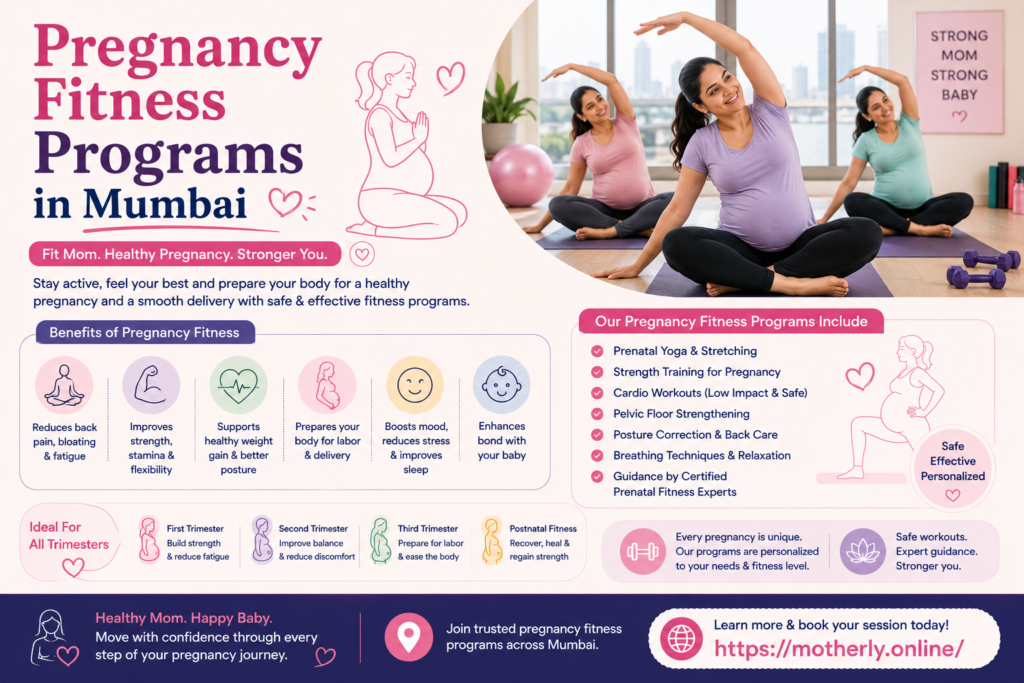
Decades of research and clinical practice confirm that regular, appropriately modified exercise during pregnancy offers wide-ranging benefits:
For the Mother
- Reduces excessive gestational weight gain and associated complications
- Lowers the risk of gestational diabetes and pregnancy-related hypertension
- Alleviates common discomforts including back pain, pelvic girdle pain, constipation and fatigue
- Improves sleep quality, which deteriorates naturally across pregnancy
- Reduces risk of varicose veins and lower limb oedema
- Builds stamina and pain tolerance ahead of labour
For Labour and Delivery
- Stronger core and pelvic floor muscles support effective pushing and reduce prolonged second stage
- Improved cardiovascular endurance increases tolerance for the physical demands of labour
- Women who exercise regularly during pregnancy have lower rates of emergency caesarean
- Better body awareness and breath control translate directly to labour coping strategies
For the Baby
- Moderate exercise improves placental function and oxygen delivery to the foetus
- Babies of physically active mothers show improved neurodevelopmental outcomes in early childhood
- Lower rates of macrosomia (large for gestational age babies) in pregnancies with managed fitness
| Strength & Conditioning Resistance training adapted for pregnancy to maintain muscle mass, joint stability and functional strength throughout all trimesters. | Aqua Fitness Low-impact pool-based exercise that reduces joint load while delivering cardiovascular and muscular conditioning benefits. | Pelvic Floor Programmes Specialist physiotherapy-led pelvic floor training to prepare for delivery and prevent or address pelvic girdle pain. | Cardio & Walking Plans Structured walking and low-impact cardio programming tailored to gestational age, fitness history and individual tolerance. |
Safe Exercise Types During Pregnancy
| Exercise Type | Notes for Pregnancy |
|---|---|
| Brisk Walking | Safe throughout all trimesters. The most universally recommended form of pregnancy exercise. Marine Drive, Bandra Bandstand and Powai Lake offer popular walking routes for Mumbai mothers. |
| Swimming and Aqua Aerobics | Ideal for the third trimester when joint pain peaks. Full-body conditioning with zero impact. Available at YMCA facilities and hotel fitness centres across Mumbai. |
| Prenatal Strength Training | Safe with modification. Avoid lying flat on back after 16 weeks. Use resistance bands, light dumbbells and bodyweight. Focus on functional movements and postural muscles. |
| Cycling (Stationary) | Safe on a stationary bike throughout pregnancy. Outdoor cycling is generally discouraged in the second and third trimester due to balance and fall risk in Mumbai’s road conditions. |
| Prenatal Yoga | Combines flexibility, breathwork, pelvic floor training and relaxation. Highly recommended as a complement to cardiovascular exercise. |
| Pilates | Prenatal Pilates focuses on core stability, posture and pelvic floor. Should be taught by a certified prenatal Pilates instructor. |
Exercises to Avoid During Pregnancy
The following types of exercise carry specific risks during pregnancy and should generally be avoided or discussed with your OB-GYN before continuing:
- Contact sports: football, basketball, martial arts, boxing
- High-fall-risk activities: horse riding, skiing, gymnastics, rock climbing
- Scuba diving (risk of foetal decompression sickness)
- Hot yoga or any exercise in high heat environments (risk of hyperthermia)
- High-intensity interval training (HIIT) without modification in later trimesters
- Heavy compound lifts (powerlifting maximal effort) after the first trimester
- Exercises requiring prolonged lying flat on the back after 16 weeks
- Any activity involving significant Valsalva manoeuvre (breath-holding during exertion)
| Heart Rate Guidelines: The older 140bpm maximum heart rate rule is now outdated. Current guidelines (ACOG 2020) use perceived exertion as the guide: you should be able to hold a conversation while exercising. If you cannot speak in full sentences, ease off. Discuss your specific targets with a certified prenatal fitness trainer. |
Trimester-Specific Fitness Adaptations
| Trimester | Exercise Modifications | Focus Areas | Warning Signs to Stop |
|---|---|---|---|
| First (1–13 weeks) | Reduce intensity if fatigued or nauseous. Avoid overheating. Continue most pre-pregnancy activities at reduced effort. | Cardiovascular base, core stability, pelvic floor | Heavy bleeding, severe cramps, dizziness |
| Second (14–27 weeks) | Avoid supine positions after 16 weeks. Add pregnancy belt if needed. Reduce load on single-leg exercises as balance shifts. | Strength maintenance, hip stability, postural muscles, glutes | Shortness of breath, chest pain, contractions |
| Third (28–40 weeks) | Reduce impact, increase support and prop use. Shorter sessions. Focus on maintaining not building. Walking and water exercise ideal. | Pelvic floor, relaxation, breath endurance, gentle mobility | Fluid leaking, painful contractions, absent foetal movement |
| “I was a regular gym-goer before getting pregnant and was terrified of having to stop completely. My prenatal trainer in Andheri built me a programme that adapted every week as my bump grew. I was doing modified strength work at 36 weeks and my delivery was only 6 hours. I genuinely believe it made a difference.”— Nisha P., Andheri West, Mumbai |
Finding a Qualified Pregnancy Fitness Trainer in Mumbai
Not every personal trainer is qualified to work with pregnant clients. When looking for pregnancy fitness support in Mumbai, confirm:
- Certification in prenatal and postnatal exercise (e.g. ACSM, NASM Pre/Postnatal, CETI, STOTT Pilates Prenatal)
- Experience working specifically with pregnant clients across all three trimesters
- Willingness to coordinate with your OB-GYN or physiotherapist if you have a specific condition
- Access to appropriate equipment including resistance bands, stability balls and bolsters
- Ability to offer both in-person and online sessions depending on your availability
Qualified prenatal personal trainers are available at gyms and wellness studios across Bandra, Andheri, Juhu, Dadar, Powai and Chembur. Hospital physiotherapy departments also offer supervised prenatal exercise programmes.
Frequently Asked Questions: Pregnancy Fitness Programs in Mumbai
Is it safe to start exercising during pregnancy if I was not active before?
Yes. Beginning a gentle exercise programme during pregnancy is safe and encouraged, even for previously sedentary women. Start with walking for 15 to 20 minutes per day and gradually build. Avoid jumping into intense exercise programmes without guidance. Your body will adapt quickly, and the benefits begin from the first week of consistent activity.
Can I continue weightlifting during pregnancy?
Moderate resistance training is safe during pregnancy with appropriate modification. Avoid maximal lifts and exercises that require holding your breath. After 16 weeks, avoid exercises performed flat on your back. Working with a certified prenatal trainer ensures your programme is progressively modified as your centre of gravity and hormone profile change throughout pregnancy.
How do I know if I am overexerting myself during pregnancy exercise?
Use the talk test: if you cannot hold a conversation while exercising, you are working too hard. Stop immediately and seek medical advice if you experience chest pain, pelvic pain, unusual shortness of breath, dizziness, vaginal bleeding, fluid leaking or absent foetal movement during or after exercise.
Does exercising during pregnancy affect the baby?
Regular moderate-intensity exercise is beneficial for the baby. It improves placental function, oxygen delivery and foetal growth regulation. Babies of physically active mothers have been shown to have improved cardiovascular function and neurological outcomes. Extreme over-exertion or exercise in excessive heat can temporarily reduce foetal oxygenation, which is why moderation and qualified supervision are important.
What is pelvic girdle pain (PGP) and can exercise help?
Pelvic girdle pain is a condition affecting the sacroiliac joints and symphysis pubis that causes pain in the pelvic region during pregnancy, worsened by walking, climbing stairs or turning in bed. It affects approximately 20 percent of pregnant women. Specialised physiotherapy-led exercise, including targeted pelvic floor strengthening and postural correction, is the first-line treatment. Mumbai physiotherapy clinics with prenatal specialisation are equipped to assess and manage PGP throughout pregnancy.
| Start Your Pregnancy Fitness Program in Mumbai Connect with certified prenatal fitness trainers and physiotherapists across Bandra, Andheri, Powai and Juhu for safe, trimester-specific exercise programmes designed around your pregnancy. |